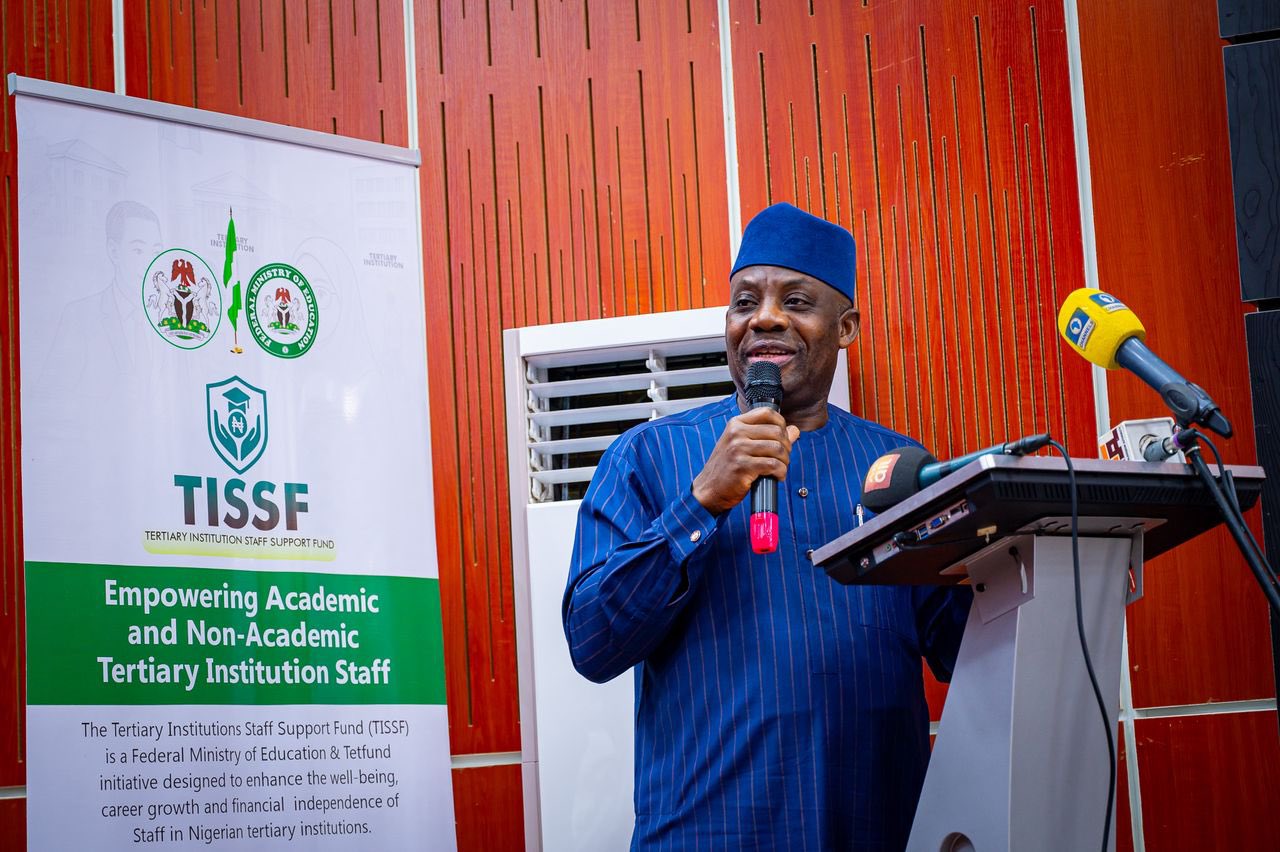
Nigeria has abandoned a controversial programme that required primary school pupils to be taught in local languages, opting to return to English as the main medium of instruction.
Education Minister Tunji Alausa said the policy, implemented three years ago, had not achieved its goals and would be discontinued immediately, affecting learners from pre-primary through to university levels.
The policy was introduced under former Education Minister Adamu Adamu, who maintained that children understood lessons better in their native languages.
Back then, studies from the United Nations were cited to support the idea that early education in a child’s mother tongue improves learning outcomes. Despite these claims, recent assessments have shown that the initiative contributed to declining performance in key national examinations.
" We have seen a mass failure rate in WAEC, Neco, and Jamb in certain geo-political zones of the country, and those are the ones that adopted this mother tongue in an over-subscribed manner," Dr Alausa told reporters in Abuja, referencing the West African Examinations Council (WAEC), National Examinations Council (Neco), and Joint Admissions and Matriculation Board (Jamb).
Nigeria’s education system faces persistent challenges, including poorly trained teachers, limited resources, low wages, and frequent strikes. Though most children enroll in primary school, less than half reach the end of secondary school, and around 10 million children remain out of school—the highest number globally, according to UN data.
The move has generated diverse reactions. Some parents and education specialists welcomed the return to English, citing early exposure to a global language as essential.
Hajara Musa, a mother of two, said, "English is a global language that is used everywhere and I feel it's better these kids start using it from the start of their schooling instead of waiting for when they are older."
Education analyst Dr Aliyu Tilde supported the reversal, highlighting the lack of teachers equipped to instruct in Nigeria’s numerous indigenous languages.
"Does Nigeria have trained teachers to teach in the dozens of indigenous languages in the country? The answer is no. Also the major exams like WAEC, Jamb are all in English and not in those mother tongue languages. I think what's needed to improve the quality of our schools is bringing in qualified teachers," he told the BBC.
However, some experts argue that abandoning the policy so soon may have been premature. Social affairs analyst Habu Dauda said, “I think it was scrapped prematurely instead of giving it more time. Three years is too little to judge a big shift such as this—the government ought to have added more investment."
The debate underscores Nigeria’s ongoing struggle to find a balance between promoting local languages and ensuring students gain the English skills necessary to succeed nationally and globally.































Comments
Sign in with Google to comment, reply, and like comments.
Continue with Google